
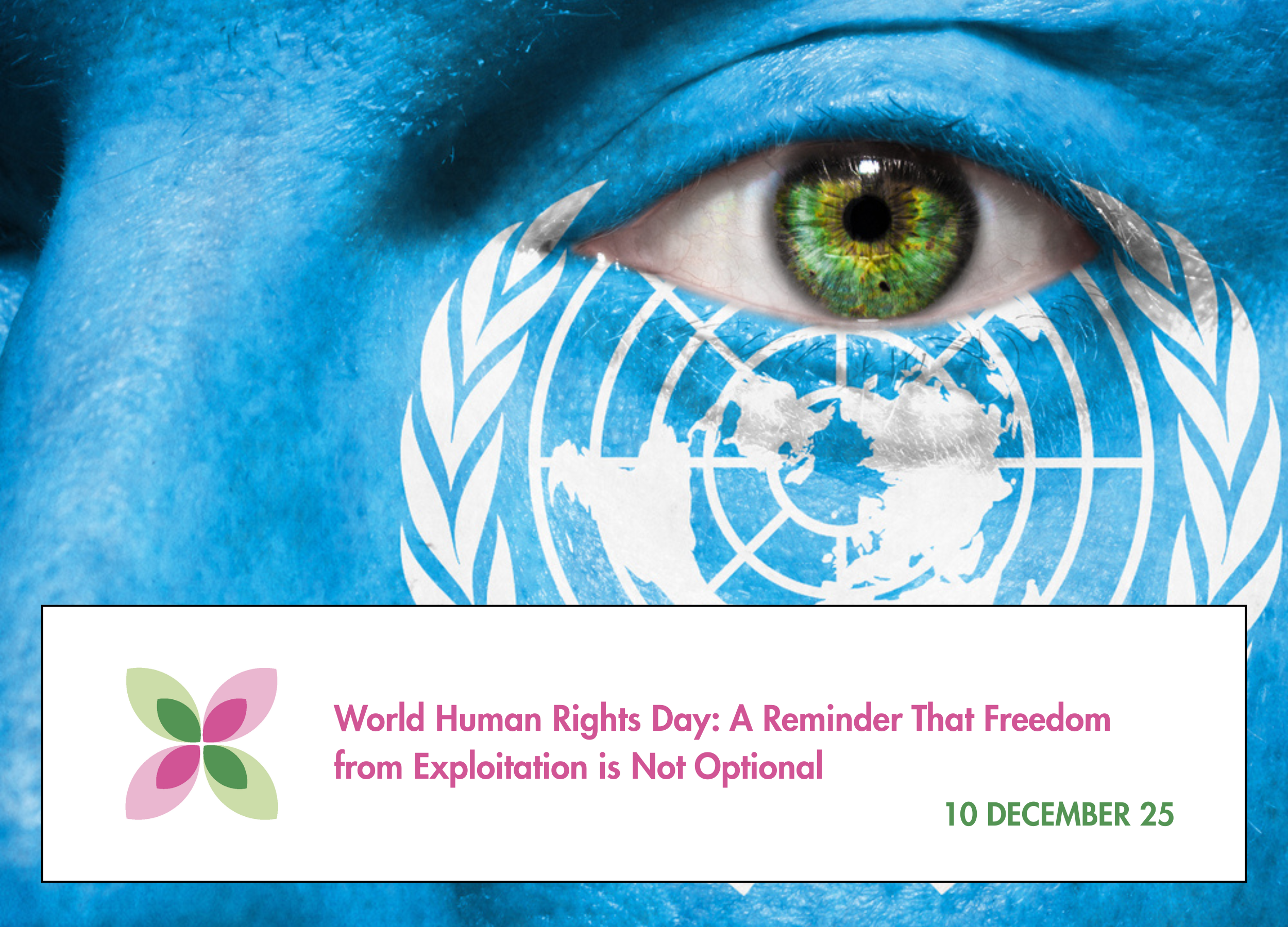
Every year on World Human Rights Day, we’re invited to pause, reflect, and recommit to the simple truth at the heart of the Universal Declaration of Human Rights: every person has the right to live and work in freedom, dignity, and safety.
For those of us working in product supply, interior design, architecture, construction, and the broader built environment, these rights aren’t abstract ideals. They show up in the real world—quietly, invisibly—through the hands that make the products we specify, assemble, install, and celebrate.
Whether it’s foam, steel, aluminium, textiles, timber, stone, rubber, leather, or the many hidden components that bring a building to life, these materials don’t appear by magic. They pass through the lives of workers—people with families, hopes, fears, and dreams—long before they ever reach a showroom, sample library, or job site.
And this year, more than ever, we need to face a reality that’s uncomfortable but undeniable:
We cannot call our buildings “sustainable” if people were exploited in the making of them.
We cannot call our products “ethical” if they were made using forced labour or in unsafe, degrading working conditions.
And we cannot say we value human rights if we overlook the rights of the very workers who make our work possible.
This isn’t about blame.
It’s about alignment—aligning our values with our actions, our sustainability goals with human dignity, and our industry’s future with the world we want to build.
Why This Matters to Our Industry
The building and construction sector is powerful.
We influence global supply chains.
We specify the materials that drive demand.
We shape the standards others follow.
And we’re also part of an industry where:
Forced labour and exploitation still exist deep in supply chains—especially in materials commonly specified in interiors and construction.
Workers producing some of the highest-risk products still lack the most basic protections.
Many businesses don’t have visibility beyond their Tier 1 suppliers, not because they don’t care, but because supply chains are long, complex, and intentionally opaque.
But acknowledging this isn’t a criticism—it is the first step toward transformation.
A Call to Action: We Can Do Better, Together
World Human Rights Day isn’t a day of finger-pointing. It’s a day of responsibility and possibility.
Here’s what every supplier, architect, designer, builder, and specifier can do:
1. Start with connection
Remember that behind every product is a human being. Real lives. Real stories.
This simple shift in mindset changes everything.
2. Stay curious
Ask questions—brave, necessary, sometimes uncomfortable ones.
Where do materials come from? Who made them? Under what conditions?
3. Commit to meaningful action
Small steps matter.
You don’t need to have all the answers — start by focusing your energy where the risks are greatest, and keep moving toward deeper transparency and stronger protections for workers
4. Have courage
It takes bravery to challenge the status quo, to demand transparency, to admit we don’t know—and to keep going anyway.
5. Collaborate
No one can address modern slavery and exploitation alone.
Share tools, insights, questions, and solutions.
Support suppliers who are genuinely trying.
Create space for honest conversations.
These are the 5 Principles of Meaningful Action—Connection, Curiosity, Commitment, Courage, Collaboration—and they’re the foundation for creating real, lasting impact in our industry.
The Future We Build Depends on the Choices We Make Today
On this World Human Rights Day, let’s honour not just the Declaration, but the people it exists to protect.
Let’s acknowledge that sustainability is not just about carbon, waste, circularity, or material innovation.
Sustainability is also—always—about people.
If workers are harmed, exploited, underpaid, unsafe, or trapped in forced labour, then our projects cannot be called sustainable.
Not truly.
But here is the good news:
We have the ability, the influence, and the collective power to change this.
We can build a future where every product we specify respects the dignity of the people who made it.
Where human rights are not an afterthought but a foundation.
Where the built environment lives up to its promise: to create spaces that support wellbeing, safety, and dignity—for everyone, at every stage of the supply chain.
This World Human Rights Day, let’s recommit to dignity in design, in supply chains, and in the built environment we shape.
Not out of obligation—but out of humanity.
Because freedom from exploitation isn’t a privilege.
It’s the most basic human right of all.